- Route
- Multiple routes across India
- Speed
- Up to 160 km/h operating speed; 180 km/h design speed
- Train type
- Semi-High-Speed Electric Multiple Unit (EMU)
- Introduced
- 2019
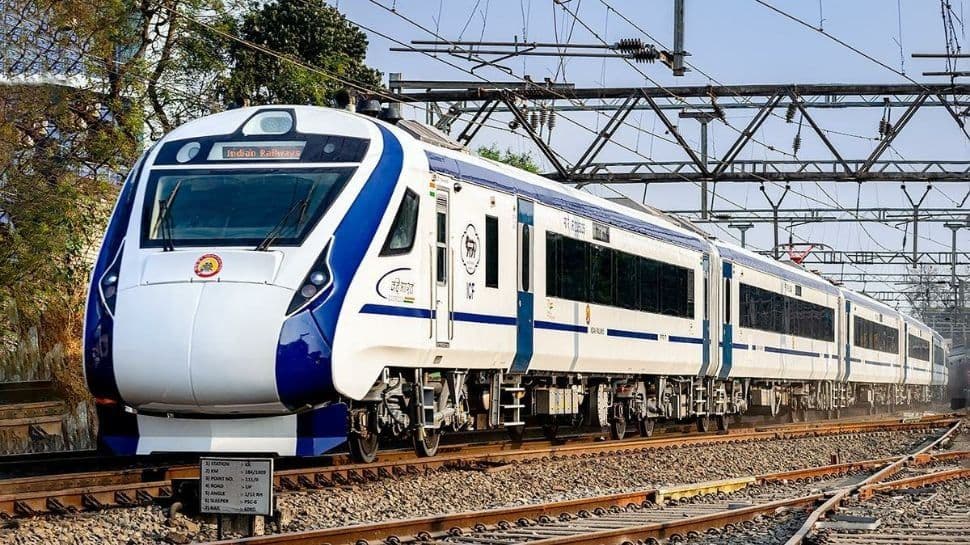
Vande Bharat Express is one of the most important developments in the modernisation of Indian Railways. Originally developed as Train 18, the trainset was designed and manufactured at the Integral Coach Factory in Chennai under India's domestic railway manufacturing programme.
The first Vande Bharat service was inaugurated on 15 February 2019 on the New Delhi–Kanpur–Prayagraj–Varanasi corridor. Since then, the Vande Bharat network has expanded across many parts of India.
Unlike traditional passenger trains hauled by a separate locomotive, Vande Bharat uses a distributed traction system. Traction equipment is spread across several coaches, allowing the train to accelerate and decelerate faster.
Current Vande Bharat Chair Car trainsets have a design speed of 180 km/h and an operating capability of up to 160 km/h, subject to the speed limits and readiness of individual railway routes. This means 180 km/h should not be described as its normal commercial operating speed.
Vande Bharat incorporates several modern passenger and safety features, including centrally controlled automatic doors, sealed gangways, CCTV cameras, emergency communication systems and improved fire-detection systems. Newer trains are also equipped with or provided for Kavach, Indian Railways' indigenous Automatic Train Protection system.
Another important feature is regenerative braking. During braking, traction motors can convert kinetic energy back into electrical energy, improving energy efficiency.
The train's rapid acceleration is particularly useful on intercity routes with multiple stops because journey time depends not only on top speed but also on how quickly a train reaches and leaves its permitted speed.
Vande Bharat has therefore become a major symbol of the transition toward modern self-propelled passenger trainsets on Indian Railways.