- Region
- Western Europe
- Country
- France
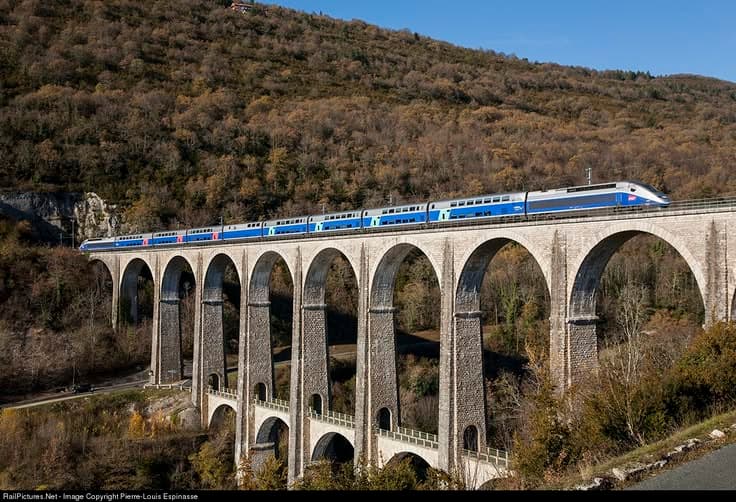
The TGV, meaning Train à Grande Vitesse, is one of the best-known high-speed train systems in the world and an important symbol of French railway technology.
The roots of the TGV project stretch back to the 1960s, when French engineers began investigating the possibilities of dedicated high-speed railway services. France inaugurated its first TGV high-speed line in 1981, marking a major turning point for passenger rail transport in Europe.
Early commercial TGV services operated at speeds around 260 km/h, an extraordinary figure for regular passenger trains at the time. Over the following decades, improved trains and infrastructure allowed high-speed services to become even faster.
The TGV introduced several important technological ideas, including articulated trainsets in which neighbouring passenger cars can share bogies. France also developed advanced cab-signalling technology for high-speed operations, where conventional trackside signals become difficult for drivers to read at very high speeds.
Another recognizable member of the family is the TGV Duplex, which uses double-deck passenger coaches to increase capacity while maintaining high-speed performance. TGV Duplex trains entered service beginning in 1995.
The success of the TGV helped demonstrate that rail could compete effectively with cars and aircraft for journeys between major cities, and its development influenced high-speed rail projects throughout Europe and beyond.