- Published
- 2026-08-26
- Category
- Railway Engineering
- Author
- Railopedia
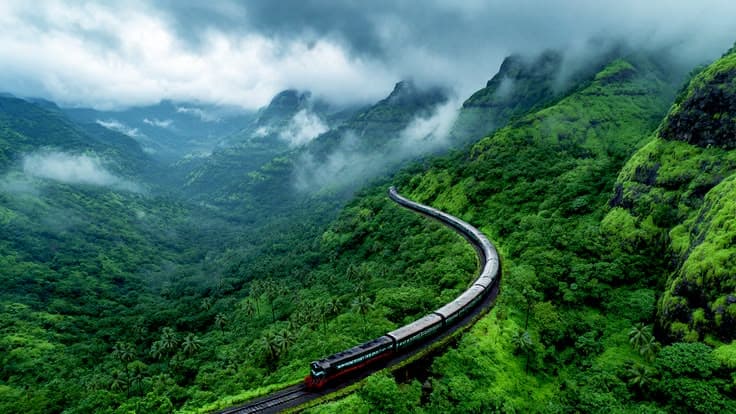
The Konkan Railway is much more than a railway line—it represents one of the most ambitious infrastructure projects undertaken in modern India. Running along the country’s western coast, the railway connects Maharashtra, Goa and Karnataka through terrain that once made direct rail connectivity extremely difficult.
Building the railway required engineers to cut through the rugged Western Ghats and cross numerous rivers and valleys. According to Konkan Railway Corporation, the route extends approximately 738.9 km and includes 91 tunnels with a combined length of more than 84 km. The line also contains hundreds of bridges, including 190 major bridges.
One of its famous engineering structures is the Panval Nadi Viaduct near Ratnagiri, while the approximately 6.5-km Karbude Tunnel is the longest tunnel on the Konkan Railway route. The railway also dramatically reduced travel distances and journey times between western and southern India.
The completed line was inaugurated with the first train running across the entire route on 26 January 1998. Today, passengers travelling through the Konkan region experience dramatic hills, tropical vegetation, rivers and coastal landscapes, making it one of India’s most memorable railway journeys.